
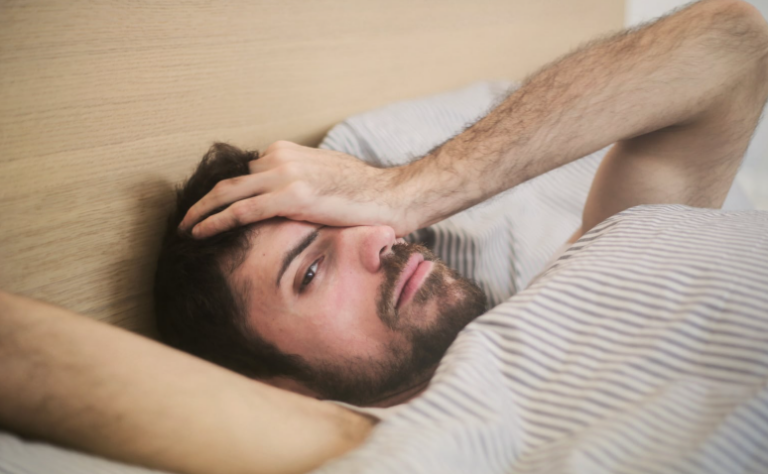
Most people think sleep is simple: you go to bed, you sleep for several hours, and you wake up rested.
But for people living with sleep apnea, the experience often feels very different.
Even after what appears to be a full night of sleep, mornings can bring heavy fatigue, mental fog, irritability, and a lingering sense that the body never fully recovered overnight.
And for many people, the most frustrating part is this:
They already know they have sleep apnea — and they still don’t feel rested.
The missing piece is understanding what sleep apnea actually does to the structure and quality of sleep itself, not just the amount of time spent in bed.
That’s where sleep apnea fatigue becomes more complicated than it first appears.
Sleep Duration and Sleep Quality Are Not the Same Thing
One of the most important ideas in sleep medicine is that sleep duration does not guarantee sleep quality.
You can spend seven or eight hours in bed, but that does not mean your brain and body completed the full cycle of restorative sleep stages.
Healthy sleep is built in cycles that include:
- light sleep
- deep sleep
- REM sleep (dream sleep)
Each stage plays a different role in physical and mental recovery.
In sleep apnea, breathing repeatedly stops and starts throughout the night. These interruptions can pull the body out of deeper sleep stages before they are fully completed.
The result is not just fragmented sleep — it is incomplete sleep.
And that is a key reason sleep apnea fatigue feels so persistent and unusual compared to normal tiredness.
What Happens to the Body During Sleep Apnea Episodes
During a sleep apnea event, airflow is reduced or temporarily blocked. Oxygen levels can drop, and the brain responds quickly to restore breathing.
Even when a person does not fully wake up, the body may experience brief arousals throughout the night.
These micro-interruptions can trigger:
- sudden increases in heart rate
- stress hormone release (like cortisol)
- brief awakenings that the person may not remember
- disruption of deep sleep cycles
Over time, this pattern prevents the body from staying in stable, restorative sleep long enough to complete full recovery processes.
The brain remains in a constant state of partial alertness instead of fully powering down.
That is one of the core mechanisms behind sleep apnea fatigue.
The body is technically asleep — but it is never fully at rest.
Why Sleep Apnea Fatigue Feels So Different
People with sleep apnea often describe their fatigue in ways that go beyond simple sleepiness.
Common descriptions include:
- waking up already tired
- feeling mentally foggy within minutes of waking
- needing caffeine just to function normally
- difficulty concentrating or remembering things
- a sense of “heavy” exhaustion rather than normal tiredness
- feeling emotionally flat or irritable
This type of fatigue is often confusing because it does not always improve much with more time in bed.
That is because the issue is not only how long someone sleeps — it is how fragmented and interrupted that sleep becomes.
In many cases, the brain never fully reaches enough deep sleep cycles to properly reset cognitive and physical systems.
So the person wakes up not restored, but simply transitioned from one state of partial sleep into wakefulness.
The Role of Deep Sleep and Why It Matters So Much
Deep sleep is one of the most important stages for physical recovery.
During this stage, the body performs essential maintenance processes such as:
- tissue repair
- immune system regulation
- hormone balancing
- memory consolidation
- metabolic restoration
When sleep is repeatedly disrupted, the body may not spend enough uninterrupted time in deep sleep to complete these functions effectively.
Over time, this can contribute to ongoing sleep apnea fatigue, even in people who believe they are “sleeping through the night.”
It also helps explain why sleep apnea is associated with broader health effects beyond fatigue, including cardiovascular strain, cognitive changes, and metabolic disruption.
Why People Often Don’t Realize What’s Happening at Night
One of the most challenging aspects of sleep apnea is awareness.
Many people do not fully wake up during breathing interruptions, which means they may not realize how often their sleep is being disrupted.
Instead, they only notice the result:
- exhaustion during the day
- brain fog
- lack of energy
- reliance on stimulants like caffeine
- reduced motivation
This disconnect between nighttime events and daytime symptoms is one reason sleep apnea can go unrecognized or underestimated for long periods of time.
The body remembers what the mind does not consciously observe.
Why Sleep Apnea Fatigue Affects More Than Energy
Sleep apnea fatigue is not just physical tiredness.
It can also affect:
- emotional regulation
- mood stability
- decision-making
- focus and attention
- stress tolerance
When the brain does not get consistent restorative sleep, it becomes harder to manage everyday cognitive and emotional demands.
This is why people with untreated or poorly managed sleep apnea often describe feeling like they are “not thinking clearly” or “not fully themselves” during the day.
The effects are systemic, not just sleep-related.
What This Understanding Changes
Recognizing that sleep apnea fatigue is rooted in disrupted sleep architecture rather than sleep duration alone helps explain why the condition can feel so persistent.
It is not simply about getting more hours in bed.
It is about whether the brain and body are able to:
- stay in deep sleep long enough
- maintain stable oxygen levels
- avoid repeated nighttime arousals
- complete full sleep cycles consistently
When those processes are disrupted, sleep stops functioning as a complete recovery system.
And that is what many people are actually experiencing — even if they are not fully aware of it.
A More Accurate Way to Think About Sleep Apnea Fatigue
A more useful way to understand sleep apnea fatigue is this:
It is not just tiredness from lack of sleep.
It is fatigue caused by repeatedly interrupted recovery.
The body is trying to rest, repair, and reset — but the process keeps getting interrupted before it can finish.
That is why the exhaustion feels so persistent, so unusual, and so difficult to shake.
Final Thought
If you live with sleep apnea and still feel exhausted after a full night’s sleep, that experience is not imaginary and it is not uncommon.
Sleep apnea changes not just how long you sleep, but how effectively your body is able to recover during that sleep.
Understanding that distinction is often the first step toward making sense of the fatigue — and recognizing why it feels so different from ordinary tiredness.