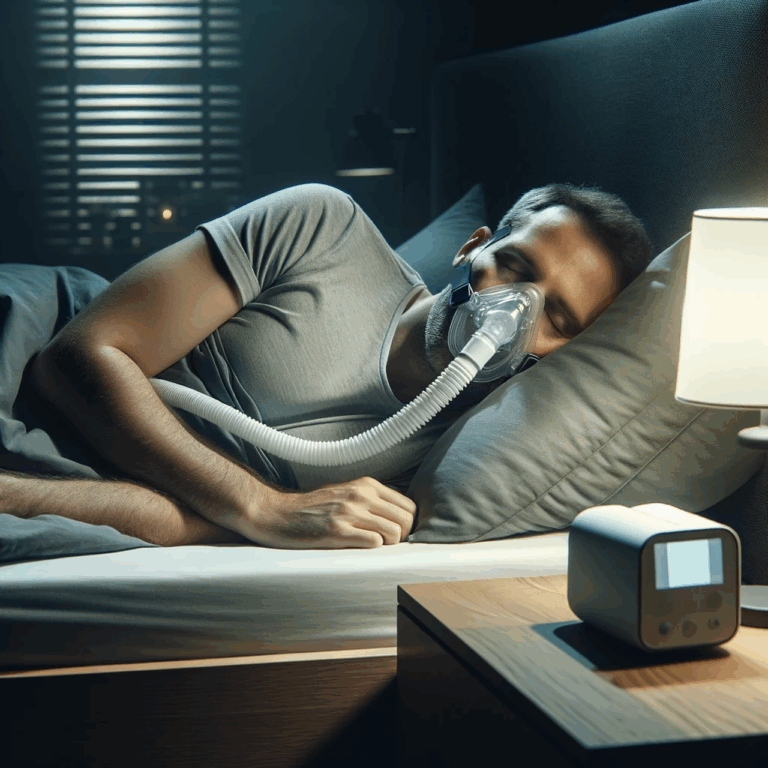
For millions of people, treating sleep apnea means strapping on a bulky mask every night — a solution that works well in theory but often falls apart in real life. Now, a sleep apnea pill under development is raising hope that some patients may soon have a simpler option. Early research suggests this medication could help keep airways open during sleep, potentially reducing breathing interruptions without a mask.
If the findings hold up in larger trials, the pill could represent a meaningful shift in how obstructive sleep apnea is treated — especially for people who struggle to tolerate CPAP therapy.
Why Sleep Apnea Treatment Has Been So Hard to Stick With
Obstructive sleep apnea occurs when the muscles in the throat relax too much during sleep, causing the airway to collapse repeatedly through the night. These breathing pauses can lower oxygen levels, fragment sleep, and raise the risk of serious health problems, including heart disease, stroke, and type 2 diabetes.
The gold-standard treatment is continuous positive airway pressure, or CPAP. The machine delivers a steady stream of air through a mask to keep the airway open. When used consistently, CPAP is highly effective.
But consistency is the problem.
Many people find the masks uncomfortable, noisy, or claustrophobic. Others struggle with dry air, skin irritation, or difficulty sleeping in certain positions. Studies show that a significant portion of patients either don’t use CPAP regularly or stop using it altogether, leaving their sleep apnea untreated.
That long-standing gap between effectiveness and real-world use is what makes the idea of a pill so compelling.
What This New Sleep Apnea Pill Does Differently
Unlike sleeping pills or sedatives, the experimental sleep apnea pill is designed to do the opposite of relaxation. It targets specific nerves and muscles that control the upper airway, helping them stay more active during sleep.
By increasing muscle tone in the throat, the medication aims to prevent the airway from collapsing — the root cause of obstructive sleep apnea. Researchers describe it as addressing the condition’s underlying mechanics rather than simply managing symptoms.
Importantly, the pill is not meant to knock people out or deepen sleep artificially. Instead, it works in the background, supporting normal breathing patterns while a person sleeps naturally.
This approach is especially notable because previous attempts at medication-based sleep apnea treatments have largely failed to show meaningful benefit. That’s why experts are paying close attention to the latest findings.
What the Research Shows So Far
Early clinical trial results, reported by multiple outlets, suggest the pill may significantly reduce the number of breathing interruptions some patients experience each hour — a key measure known as the apnea-hypopnea index.
Participants in the studies also showed improvements in oxygen levels during sleep, another critical marker of sleep apnea severity. Researchers noted that the benefits were most pronounced in people whose apnea is strongly linked to muscle control in the airway, rather than factors like obesity alone.
That distinction matters. Sleep apnea isn’t the same for everyone, and experts emphasize that no single treatment works universally. Still, the results suggest that a targeted medication could fill an important gap for a subset of patients who currently have few tolerable options.
The pill is still being studied and is not yet widely available. Larger trials will be needed to confirm its safety, effectiveness, and long-term benefits.
What This Could Mean for Patients — and What It Doesn’t Yet
It’s tempting to view this development as the end of CPAP machines, but specialists urge caution. Even if approved, the sleep apnea pill would not replace existing treatments overnight — or for everyone.
CPAP remains the most effective therapy for moderate to severe sleep apnea, particularly when used consistently. Oral appliances, weight management, positional therapy, and surgery also remain important options depending on individual needs.
What the pill could offer is choice.
For people who can’t tolerate CPAP despite repeated efforts, a medication-based approach could improve symptoms, sleep quality, and overall health. It may also serve as a complementary therapy, reducing apnea severity enough to make other treatments more manageable.
Regulatory review and additional studies are still ahead, but experts agree on one point: after decades with few new options, sleep apnea treatment may finally be entering a more flexible era.
For patients exhausted by masks, hoses, and disrupted nights, that alone is welcome news.