
Let’sTalkRX Trivia –
Which of these founding fathers (and rivals) never served as President or Vice President?
Alexander Hamilton
Aaron Burr
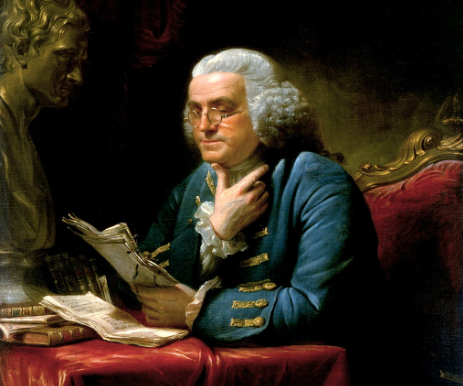
Answer: Alexander Hamilton
Presidents’ Day has become one of America’s most confusing holidays—and also one of its most interesting.
For many people, it’s the holiday that shows up every February with a long weekend, a burst of patriotic advertising, and the annual question: whose birthday is this supposed to be?
The answer is both simple and complicated.
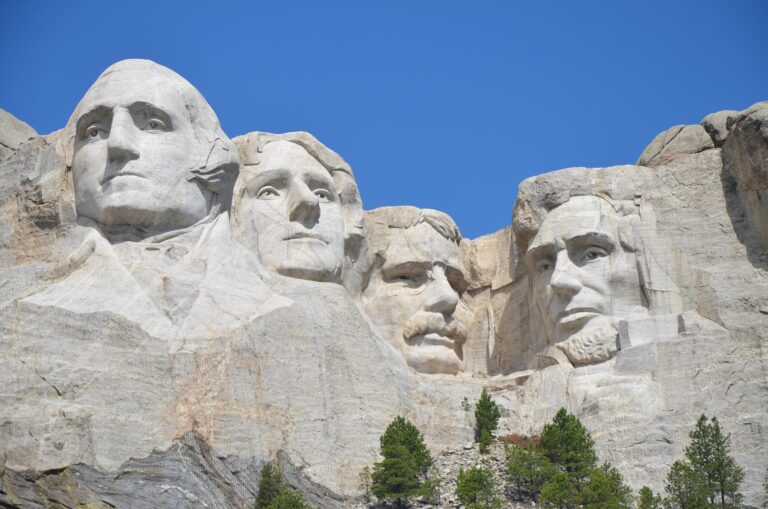
Presidents’ Day didn’t start as a celebration of all U.S. presidents. It started as a tribute to one man: George Washington. Over time, it absorbed the legacy of Abraham Lincoln, drifted into a broader “presidential” theme, and eventually became the modern cultural catch-all we recognize today.
And here’s the part most Americans forget: February is genuinely packed with presidential birthdays. Washington and Lincoln aren’t the only ones. Not even close.
It Started as Washington’s Birthday
The federal holiday Americans now casually call “Presidents’ Day” is still officially named Washington’s Birthday.
Washington was born on February 22, 1732, and for generations his birthday was commemorated across the United States. In the 1800s, Washington’s Birthday celebrations were common in many states and cities. Speeches, parades, school programs, and public commemorations were a way for the young country to reinforce its identity and values.
Washington’s role in American history is difficult to overstate. He led the Continental Army through the Revolutionary War, presided over the Constitutional Convention, and served as the first president. Over time, Washington became more than a historical figure—he became a civic symbol.
And for a long time, the holiday honoring him felt straightforward: Washington’s birthday was Washington’s birthday.
The Law That Moved the Holiday
Everything changed in the early 1970s.
In 1971, Washington’s Birthday was moved to the third Monday in February under the Uniform Monday Holiday Act, which shifted several federal holidays to Mondays to create more consistent three-day weekends.
It was a practical decision, designed to standardize holiday observance and boost travel and commerce.
But it created a strange result: the third Monday in February can fall between February 15 and February 21, meaning the holiday never occurs on February 22.
In other words, the United States created a Washington birthday holiday that never actually lands on Washington’s birthday.
That one detail helps explain why the holiday began to feel more general over time. Once a holiday is detached from its original date, it becomes easier for the culture to reinterpret it.
Why People Started Calling It “Presidents’ Day”
The most obvious reason is Abraham Lincoln.
Lincoln, born February 12, 1809, has long been one of the most widely commemorated presidents in American history. Many states historically observed Lincoln’s birthday as its own holiday. Others paired Lincoln’s celebration with Washington’s.
Over time, the two birthdays became culturally linked—especially as Washington’s Birthday drifted away from February 22. In practice, the holiday became less about a single president and more about America’s presidential legacy.
Then retail marketing accelerated the shift.
“Presidents’ Day” became a convenient label for businesses and advertisers. It sounded patriotic, it fit the season, and it didn’t require anyone to know the finer details of federal holiday naming conventions.
The result is what we have today: an official holiday called Washington’s Birthday that most Americans refer to as Presidents’ Day.
The Forgotten Fact: February Is Full of Presidential Birthdays
Here’s where the holiday becomes genuinely fun as an American history lesson.
Washington and Lincoln are not the only presidents with February birthdays. Several other U.S. presidents were born in February, including:
- Ronald Reagan (February 6)
- William Henry Harrison (February 9)
- Abraham Lincoln (February 12)
- Grover Cleveland (February 18)
- George Washington (February 22)
- James Buchanan (February 23)
- John Tyler (February 29)
John Tyler’s birthday is a trivia favorite, because it falls on February 29, meaning his “true” birthday only appears on the calendar every four years.
Tyler is also historically notable for another reason: he was the first vice president to assume the presidency after a president died in office. His succession helped establish a precedent that later became formal law.
In other words, February isn’t just the month of Presidents’ Day. It’s arguably the month of presidents.
Why Washington and Lincoln Still Dominate the Holiday
Even with other presidential birthdays in February, Washington and Lincoln remain the central figures of the holiday’s identity.
Washington represents the founding era: the Revolution, the Constitution, and the creation of the presidency itself. He is often remembered as a symbol of restraint—someone who could have held power indefinitely, but chose to step down and establish limits.
Lincoln represents national survival. His presidency is tied to the Civil War, emancipation, and the attempt to preserve the Union. He is remembered not for founding the nation, but for keeping it from breaking apart.
In many ways, Washington and Lincoln serve as bookends of America’s first century: the creation of the republic and the crisis that nearly destroyed it.
That’s why the holiday gravitates toward them, even as it becomes more general.
What Presidents’ Day Means Today
Modern Presidents’ Day occupies a strange place in American culture.
It isn’t like Independence Day, with fireworks and a shared national mood. It isn’t like Thanksgiving, with deep family traditions. And it isn’t like Memorial Day or Veterans Day, which have specific meanings tied to service and sacrifice.
Presidents’ Day is more abstract. It’s about leadership, national identity, and the office of the presidency itself.
For some Americans, it’s a moment to reflect on the institution and the role it plays in American life. For others, it’s a day to debate which presidents were great, which were disastrous, and which were simply forgotten.
And in a time when politics can feel exhausting, Presidents’ Day also serves as a reminder that American political conflict is not new. Even in the early republic, presidents faced bitter partisanship, public distrust, and intense disagreements about the direction of the country.
A Simple Presidents’ Day Challenge
If you want Presidents’ Day to feel like more than a long weekend, try a small challenge:
Pick one president you know almost nothing about and spend ten minutes learning their story.
Not Washington. Not Lincoln. Try someone like:
- John Tyler
- James Buchanan
- Grover Cleveland
- William Henry Harrison
You may be surprised how much their presidencies echo issues Americans still debate today: executive power, economic instability, foreign influence, national unity, and the limits of government.
The Bottom Line
Presidents’ Day is a uniquely American holiday that evolved without a single clear plan. It began as Washington’s Birthday, absorbed Lincoln’s cultural influence, and slowly became an unofficial celebration of the presidency itself.
And the next time someone asks, “Whose birthday is this?” the best answer might be:
It’s complicated—but February is full of presidential birthdays anyway.