

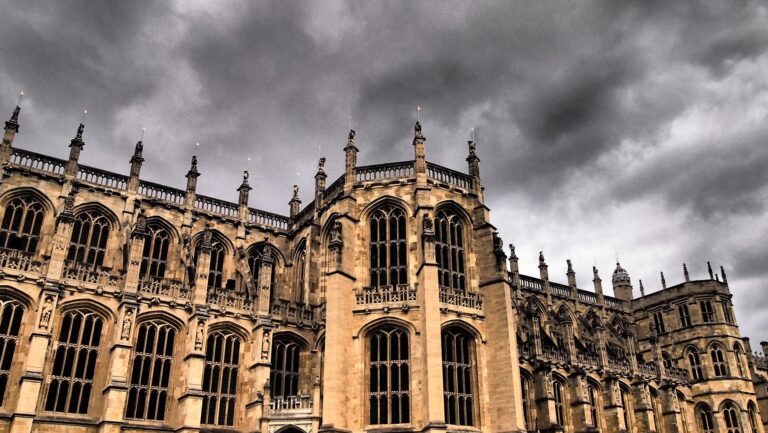
The last time a royal was arrested was in 1647, during the English Civil War.
In a dramatic legal and reputational turn, Andrew Mountbatten‑Windsor — the man formerly known to the world as Prince Andrew — was arrested on February 19, 2026 on suspicion of misconduct in public office. The arrest took place at his residence in Norfolk, England, and represents the most serious official development yet in a controversy that has shadowed him for years.
While speculation in some quarters has leaned toward terms like “espionage,” the official allegation is not espionage in the strict legal sense. Law enforcement is investigating whether Mountbatten-Windsor, during his tenure as the United Kingdom’s special trade envoy from 2001 to 2011, may have improperly shared or handled confidential government communications or sensitive information — potentially in connection with individuals tied to the late financier and convicted sex offender Jeffrey Epstein. This fits within the legal framework of misconduct in public office, a serious common law offense in the UK that reflects alleged abuse of position and breach of public trust.
Authorities questioned Mountbatten-Windsor and released him under ongoing investigation as evidence continues to be gathered and reviewed. No formal prosecution has yet been filed, and he remains a subject of inquiry as prosecutors and police assess whether to bring charges.
A Fall From Royal Privilege to Criminal Inquiry
Mountbatten-Windsor’s journey to this point is a complex arc of privilege, controversy, and legal scrutiny that stretches back more than a decade.
Born the second son of Queen Elizabeth II, he once held a prominent position in the British Royal Family and served with distinction as a Royal Navy officer, including in the Falklands War. Later, he took on a diplomatic role focused on promoting UK trade interests around the world.
But his reputation took a devastating hit in 2019, when he appeared in a televised interview attempting to explain his longtime friendship with Epstein. The broadcast was widely condemned for its tone and factual gaps, deepening public skepticism about his judgment and leaving lasting damage to his public image.
The fallout intensified when documents and testimony linked Mountbatten-Windsor to social circles built around Epstein and Virginia Giuffre, an accuser whose civil sexual assault lawsuit against him in U.S. court was settled in 2022. Though the settlement included no admission of liability, it required a substantial financial payment and a public expression of regret for his association with Epstein; it also intensified scrutiny of his conduct both publicly and within British institutions.
In late 2025, Buckingham Palace made a formal break: King King Charles III issued Letters Patent stripping him of his titles — including “Prince” and “His Royal Highness” — and removing his official profile from the royal household’s website. As a result, he now goes by his double-barreled name Andrew Mountbatten-Windsor in all civilian contexts. His royal lineage still technically places him in the line of succession, but he is no longer an active member of the monarchy’s public or ceremonial life.
This arrest marks a new — and far more serious — chapter.
Misconduct in Public Office: What It Means
Under UK law, misconduct in public office is a criminal offense applied when a person entrusted with public responsibilities willfully abuses or neglects those duties in a manner that violates the public trust.
In Mountbatten-Windsor’s case, investigators are examining whether, while acting in an official capacity as the UK’s trade envoy, he mishandled sensitive government information or communications. The concern is not merely that he had questionable associations — but that he may have jeopardized official functions or confidentiality obligations related to his role.
This differs from espionage as that term is used in national security law, which usually involves knowingly passing state secrets to a foreign power. The current allegation is framed around misuse of official position and the trust inherent to that role.
The maximum possible sentence for misconduct in public office can be severe — including life imprisonment — but much will depend on what evidence prosecutors are ultimately prepared to present and whether a court finds that the legal thresholds for prosecution have been met.
Legal experts note that convictions for this offense are rare, especially for figures who once held high public profile roles, adding complexity to the case.
Continued Epstein Fallout and Legal Scrutiny
The misconduct investigation stems from newly unsealed documents and communications that have been examined as part of broader interest in Mountbatten-Windsor’s past connections. Some reports suggest that confidential correspondence linked to his official duties may have been shared with individuals in Epstein’s circle, though no formal charge on that basis has yet been filed.
Like the civil case years earlier, the current inquiry underscores how deeply the Epstein network continues to reverberate, long after Epstein’s death in custody in 2019.
Royal spokespeople have said little beyond affirmations that the legal process should proceed independently, while King Charles reportedly supports the investigation and stresses that justice must take its course. Family members, including Mountbatten-Windsor’s daughters, have largely remained out of the spotlight amid continuing media coverage.
What Comes Next
For Mountbatten-Windsor, the next steps hinge on the ongoing investigation. Police will continue to gather evidence, interview witnesses or relevant parties, and work with the Crown Prosecution Service to determine whether formal charges should be laid.
Possible outcomes include:
- No charges — if prosecutors conclude the evidence is insufficient.
- Charges of misconduct in public office — if authorities believe they can prove willful misuse of position.
- Expansion of the investigation — if new evidence surfaces.
Regardless of the legal outcome, the arrest represents a historic moment: a former senior royal figure subjected to criminal inquiry in a way unprecedented in modern times.
What was once a life of privilege and ceremonial duty has, for Andrew Mountbatten-Windsor, become defined by legal jeopardy and public scrutiny — a trajectory few in the British royal orbit have ever experienced.