
In a moment that blended politics, celebrity culture, and the modern influencer economy, former YouTube star and professional boxer Jake Paul received an unexpected political endorsement this week from President Donald Trump—for a campaign that doesn’t currently exist.
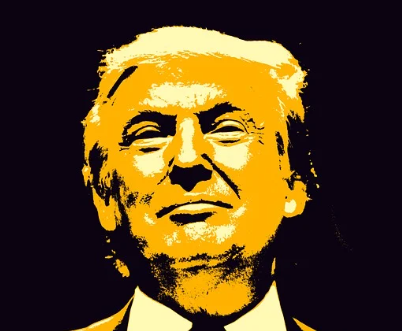
The unusual exchange unfolded during a campaign rally in Kentucky, where Paul appeared on stage alongside Trump and addressed the crowd. During his remarks, Trump praised the 29-year-old social media personality and predicted he would eventually run for public office.
“If you ever do that, you will have my complete and total endorsement,” Trump told Paul, drawing cheers from supporters in attendance.
The statement quickly spread across social media, with clips from the rally circulating widely online and prompting immediate speculation about whether Paul might seriously consider entering politics.
So far, there is no indication that he plans to.
A Celebrity Guest at a Political Rally
Paul’s appearance at the rally highlighted a growing overlap between political movements and online personalities who command large digital audiences.
The Cleveland-born influencer first rose to prominence on YouTube in the mid-2010s, building a following through viral prank videos and lifestyle content. Over time, he transitioned into professional boxing, turning high-profile exhibition matches into pay-per-view events that drew millions of viewers.
Today, Paul operates as a hybrid celebrity—part athlete, part entertainer, and part online commentator—maintaining a massive following across platforms.
His presence at a presidential rally reflects how influential figures from outside traditional politics are increasingly participating in political events.
Trump’s Unexpected Prediction
During the rally, Trump introduced Paul to the crowd as someone with significant cultural influence, praising his ability to connect with younger audiences.
Trump then made a prediction that surprised many observers: he said he believed Paul would eventually seek elected office.
“If he runs for office someday,” Trump told the audience, “he’ll have my complete endorsement.”
The remark was delivered partly in jest but clearly resonated with the crowd, which responded with loud applause.
Political endorsements typically follow the launch of a formal campaign or at least an exploratory committee. In this case, however, Trump offered his support before any such step had been taken.
That unusual dynamic helped propel the moment into the national conversation.
Jake Paul’s Response
Paul did not announce a campaign during the rally, nor did he suggest that he intends to run for public office in the near future.
Instead, he used his brief remarks to praise Trump and emphasize the importance of civic participation.
He told the audience that Americans should not be afraid to speak openly about their beliefs and encouraged younger voters to stay engaged in the political process.
While the comments were relatively brief, the symbolism of the moment was unmistakable: one of the country’s most recognizable online personalities standing beside a sitting president on a political stage.
A New Kind of Political Celebrity
Moments like this reflect a broader transformation in American politics.
For decades, celebrities occasionally endorsed candidates or appeared at campaign events. But the rise of social media has created a new class of public figures—digital influencers with audiences that rival those of traditional media outlets.
Paul’s online reach is enormous. Across YouTube, Instagram, TikTok, and other platforms, he has tens of millions of followers who regularly consume his content.
That kind of influence has not gone unnoticed by political campaigns, which increasingly view social media personalities as potential allies in reaching younger voters.
Trump himself has long embraced celebrity culture as part of his political brand. Before entering politics, he spent decades in entertainment and business, building a public persona that blended media spectacle with political messaging.
Inviting an influencer like Paul on stage fits naturally within that approach.
The Politics of Viral Moments
The rally moment also demonstrates how modern political messaging spreads.
Within minutes of the endorsement, short video clips began circulating across social media platforms. Supporters praised the interaction, while critics questioned whether a professional boxer and internet personality should be discussed as a potential political candidate.
The viral nature of the exchange amplified the moment far beyond the rally audience itself.
In the past, such remarks might have remained a footnote in a campaign speech. Today, a brief interaction on stage can become a national talking point within hours.
Could Jake Paul Actually Run for Office?
Despite the sudden attention, there is no evidence that Paul is preparing to enter politics.
At 29, he meets the minimum age requirement to run for the U.S. House of Representatives but would not yet be eligible for the presidency, which requires candidates to be at least 35 years old.
More importantly, launching a serious political campaign typically requires extensive preparation, including fundraising networks, campaign infrastructure, and policy positions.
Paul has not indicated that he is pursuing any of those steps.
Still, the idea of an influencer running for office is no longer purely hypothetical. In recent years, several public figures who built their fame outside traditional politics have successfully launched campaigns.
That reality may be part of what made Trump’s prediction resonate with rally attendees.
The Blurring of Politics and Entertainment
Ultimately, the moment involving Trump and Paul illustrates a broader cultural shift.
American politics increasingly operates within the same media ecosystem as entertainment, sports, and online culture. Politicians appear on podcasts, influencers attend political rallies, and viral clips shape public conversation.
For some observers, the crossover is a natural evolution in an era dominated by social media.
For others, it raises questions about whether celebrity influence is becoming too closely intertwined with political power.
Either way, the exchange between Trump and Paul captured a distinctly modern phenomenon: a political endorsement delivered not to a seasoned candidate, but to a digital-age celebrity whose potential campaign exists only as a prediction.
Whether that prediction ever becomes reality remains to be seen.
For now, the moment stands as another reminder that in today’s political landscape, the line between politics and entertainment continues to blur.