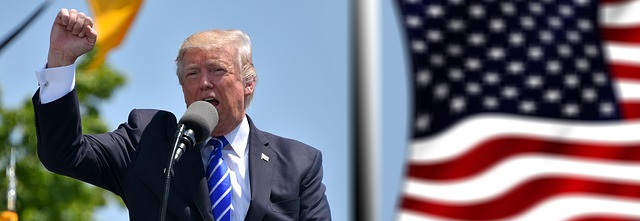
President Donald Trump ignited controversy this week after suggesting that Tylenol (acetaminophen) during pregnancy could cause autism, and signaling that his administration would move toward new warning labels. The announcement — dubbed by critics as “Trump cancels Tylenol” — came during a White House press conference alongside Health Secretary Robert F. Kennedy Jr. and Dr. Mehmet Oz.
The remarks, which also revisited the long-debunked theory that vaccines contribute to autism, were swiftly condemned by medical experts as misleading, unsupported, and potentially dangerous for pregnant individuals.
The Announcement
Trump urged pregnant women to avoid acetaminophen, claiming it is a driver of autism cases in children. The administration previewed regulatory steps, including:
- FDA label updates recommending the lowest dose and shortest duration of Tylenol use in pregnancy.
- A $50 million NIH research program investigating environmental and pharmaceutical influences on autism.
- Proposed approval of leucovorin for autism symptoms linked to cerebral folate deficiency, with Medicaid coverage.
Citing autism prevalence at 1 in 31 children (3.2%), Trump framed the changes as overdue government action.
What the Science Shows
The problem, researchers say, is that the evidence doesn’t support the claims.
- Some observational studies have hinted at weak associations between prenatal acetaminophen use and neurodevelopmental issues.
- But well-designed research consistently shows no causal link between Tylenol and autism.
- Confounding factors, like maternal infection or inflammation, likely explain the statistical signals.
Global health agencies, including the World Health Organization, continue to recommend acetaminophen as the safest pain and fever reducer during pregnancy when used appropriately.
Why Experts Are Concerned
Doctors and scientists warn that Trump’s framing risks public health. Fever and untreated pain in pregnancy can themselves harm fetal development. Discouraging Tylenol without clear alternatives may cause more harm than good.
Helen Tager-Flusberg, an autism researcher, said the rhetoric “confuses the public and frightens families,” adding that the administration is politicizing medical science.
The re-introduction of vaccine claims drew further alarm. The vaccine-autism link has been thoroughly disproven in decades of studies, yet Trump and Kennedy invoked it as part of their narrative.
Politics Meets Medicine
Labeling and research investments are real policy actions, but critics say the messaging — packaged in a headline-grabbing way as “Trump cancels Tylenol” — oversimplifies autism’s complex causes. Genetics, prenatal health, and environmental factors play a much larger role than any over-the-counter medication.
The episode highlights how medical policy is being reframed through political storytelling, with potentially far-reaching consequences for public trust in science.