These tiny patches are trending—but do they really help healthy people eat better?
They’re about the size of a quarter, stick to your arm like a nicotine patch, and promise to “revolutionize your health.”
They’re called continuous glucose monitors (CGMs)—and thanks to influencers, startups, and even President Trump’s nominee for Surgeon General, Dr. Casey Means, they’re having a major wellness moment.
But here’s the question no one’s really answering: If you don’t have diabetes… do you need one?
First, What Even Is a Glucose Monitor?
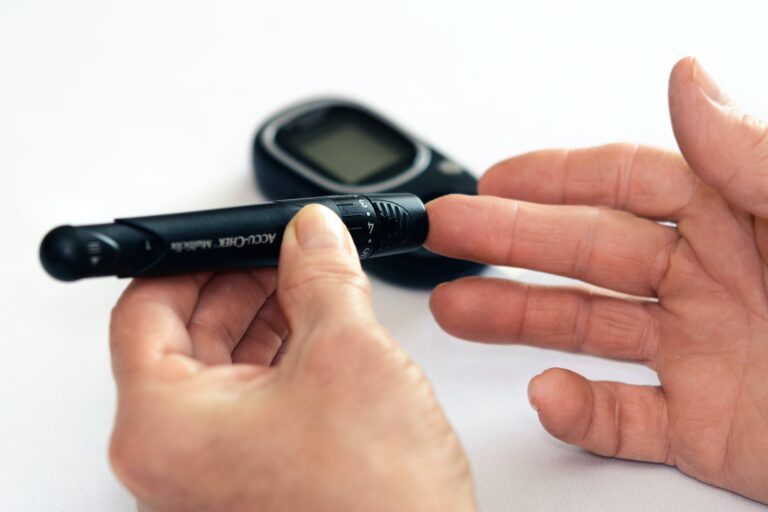
A CGM is a small device worn on your skin that checks your blood sugar (technically, the sugar in the fluid between your skin cells) every few minutes. It beams that data to an app on your phone, so you can see how different foods affect your glucose levels in real time.
It was a game-changer for people with diabetes—no more constant finger pricks. But in 2024, the FDA gave the green light for non-diabetics to use CGMs for general health tracking. Now, two big players—Dexcom and Abbott—are selling patches for anyone curious about their metabolism, for around $100/month.
The Hype vs. the Science
According to the companies behind these monitors, wearing one can help you sleep better, eat smarter, even lose belly fat. But nutrition experts urge caution.
Professor Sarah Berry of King’s College London explains:
“Glucose spikes after meals are normal for people without diabetes. We do not need to flatten these curves.”
In other words, your blood sugar is supposed to rise and fall—it’s how digestion works.
Still, that doesn’t mean CGMs are useless for the average person. In fact, some people might learn something truly valuable.
3 Times Glucose Monitors Might Actually Help You
1. If carbs hit you harder than most
Some healthy people discover they’re extremely sensitive to even complex carbs like brown rice or beans. A CGM can reveal if your blood sugar is spiking unusually high—then help you adjust your meals to avoid that.
Even small changes (less rice, more protein) can lead to better energy and reduced visceral fat, according to nutritionist Karen Kennedy.
2. If you struggle to follow healthy eating advice
We all know what we should eat. But motivation? That’s another story.
Seeing your body’s real-time response to food can be a wake-up call. One of Kennedy’s clients refused to change her carb-heavy breakfast—until she saw the dramatic sugar spike. The next day? She switched to eggs and avocado. Instant change, instant reward.
3. If you need more food awareness
One NYU study found that people who logged their meals consistently while using a CGM were more likely to stick with healthy changes. The monitor didn’t just track sugar—it reinforced habits.
“It gives people agency,” Kennedy said. “They don’t have to wait six months and see a doctor. They can see what’s working today.”
The Catch: It’s Not a Shortcut
For all the buzz, CGMs are not magical health devices. They won’t make you lose weight or get healthier unless you’re willing to change your behavior based on the data.
They’re also not necessary for everyone. Most healthy people don’t need to worry about glucose curves unless a doctor recommends it.
And let’s be honest—at $100/month, that’s a pricey habit just to see what your cereal’s doing to your blood sugar.
So, Should You Try It?
If you’ve got a curiosity for biohacking, a sensitivity to carbs, or just want some real-time insight into your meals, a CGM could be a useful (if temporary) tool.
But for most of us, good nutrition still comes down to the basics: eat more fiber, eat less sugar, move your body, and get some sleep.
No patch required.
Top Weight Loss Programs

Remedy Meds

Medvi

Hims

ShedRX