
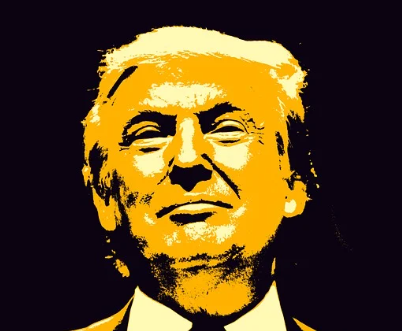
For years, President Trump has delivered a simple message about tariffs: foreign countries pay them. It’s a line designed to reassure voters that tariffs punish overseas competitors while strengthening the U.S. economy at little cost to Americans.
But new research suggests the opposite is largely true.
A study published Thursday by economists at the Federal Reserve Bank of New York and Columbia University found that through November 2025, roughly 90% of the economic burden of Trump’s tariffs fell on U.S. companies and consumers — not foreign exporters.
It’s a finding that undercuts one of the most repeated claims of Trump’s trade agenda, and it highlights a reality economists have warned about for years: tariffs may be aimed at other nations, but the costs often land at home.
Let’sTalkRX Trivia –
Which of these founding fathers (and rivals) never served as President or Vice President?
Alexander Hamilton
Aaron Burr
Answer: Alexander Hamilton
What the Researchers Studied
The economists examined tariff “incidence,” a term that describes who ultimately pays the cost of an import tax.
Tariffs are collected when goods enter the United States. The importer of record — often an American company — pays the tariff directly to the U.S. government. From there, businesses can try to recover the cost in several ways:
- raising prices for customers
- accepting lower profit margins
- negotiating discounts with foreign suppliers
- shifting sourcing to countries with lower tariff rates
Trump and his advisers have long argued that foreign companies would respond by lowering their prices, effectively “eating” the tariff to maintain access to the U.S. consumer market. While that does happen in some cases, the study suggests it is not the dominant outcome.
The Core Finding: The U.S. Paid Most of the Cost
According to the study, from January 2024 through November 2025, U.S. firms and consumers bore the bulk of tariff costs. In the first eight months of 2025, the U.S. share rose even higher — with researchers estimating 94% of the tariff burden was borne domestically.
Even by November, after months of contract renegotiations, foreign suppliers were only absorbing a modest share. The researchers found that 86% of tariff costs were still being passed through to the United States.
“In sum,” the study concluded, “U.S. firms and consumers continue to bear the bulk of the economic burden of the high tariffs imposed in 2025.”
A Repeat of Trump’s First-Term Tariff Pattern
The same researchers previously analyzed tariffs from Trump’s first term. Their findings from the 2018 and 2019 trade war were even more direct: the tariffs were wholly passed on to American businesses and consumers.
That earlier research helped establish a broad consensus among economists that tariffs tend to raise costs inside the importing country, especially when supply chains and consumer demand don’t shift quickly enough to offset the tax.
The new data suggests that pattern continued in Trump’s second-term tariff expansion.
Why Many Consumers Didn’t See Immediate Sticker Shock
Despite the size of the tariffs, the impact has not been as dramatic as some economists anticipated. Prices rose for some imported goods, but for many consumers, costs did not balloon overnight.
The study suggests several reasons:
Large companies often had the scale and leverage to soften the impact. Many stockpiled inventory before tariffs took effect, buying time before new import taxes hit their supply chains. Others used their purchasing power to negotiate supplier discounts, or they shifted sourcing away from high-tariff countries.
Some major corporations also accepted smaller profit margins temporarily, betting that the administration would eventually reach trade deals that reduced the tariff burden.
In short, some of the cost was delayed, and some was absorbed inside corporate balance sheets — at least for a while.
Smaller Businesses Had Fewer Options
For smaller businesses, the picture has been tougher.
Unlike large corporations, small and mid-sized companies often operate with thinner margins and less bargaining power. Many lacked the leverage to secure discounts from foreign suppliers, and they didn’t have the flexibility to quickly reroute supply chains to other countries.
As a result, tariffs became a bigger drag. Some businesses raised prices. Others absorbed losses. And for the most vulnerable firms, the additional costs threatened their long-term viability.
The Price Effects Were Real — Even If Uneven
The study also highlighted how sharply tariff levels increased. Over the year, the average tariff rate on U.S. imports rose to 13%, up from 2.6%. The increase spiked in April and May as the Trump administration expanded tariffs on exports from multiple foreign countries, including China.
The researchers’ findings imply that, overall, U.S. import prices for goods rose by roughly 11% because of the tariffs.
That does not mean every item on every shelf jumped 11%. But it does suggest a broad, economy-wide rise in import costs — even if companies and consumers experienced it unevenly.
Trade Shifts: China Down, Mexico and Vietnam Up
Tariffs also reshaped trade flows.
China’s share of U.S. imports — which dropped sharply during Trump’s first-term trade war — fell further last year. Imports from Mexico and Vietnam increased, helping fill the gap.
That shift reflects a reality of modern tariffs: rather than bringing production back to the United States overnight, many businesses simply redirect supply chains to countries with lower tariff rates.
What Happens Next
The researchers noted that tariff incidence could continue evolving.
Some companies delayed shipments and relied on pre-tariff inventory to avoid immediate price hikes. But as those stockpiles run down, avoidance becomes harder. Foreign suppliers may eventually absorb a slightly larger share as contracts are renegotiated — and the study did find that trend emerging late in 2025.
Still, even at the end of the year, the United States remained overwhelmingly responsible for the cost.
Bottom Line
Trump’s messaging has framed tariffs as a tax on foreign nations. But according to this new analysis from the New York Fed and Columbia, tariffs have functioned more like a tax paid mostly by Americans — through higher business costs, tighter margins, and some higher prices.
The politics of tariffs may be simple.
The economics are not.
And the numbers, once again, point to the same conclusion: the bill is landing at home.