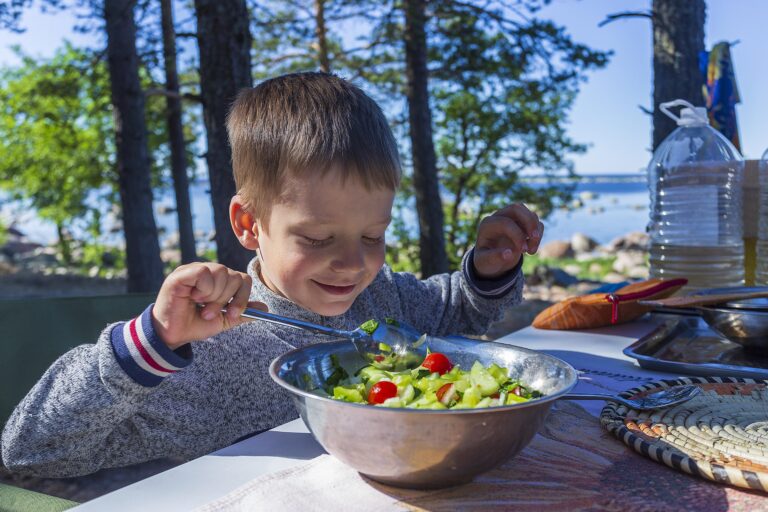
New research suggests a child’s relationship with vegetables may begin long before the first bite.
Parents have tried just about everything to get kids to eat vegetables.
Hiding spinach in smoothies. Calling broccoli “little trees.” Negotiating one bite at a time across the dinner table.
And for many families, it still turns into a nightly struggle.
But new research is pointing to something unexpected: a child’s taste preferences may start developing before they’re even born.
In a small but fascinating new study from researchers at Durham University and Aston University, scientists found that children exposed to certain vegetable flavors during pregnancy appeared more accepting of those same vegetables years later.
The findings don’t mean parents have discovered a magic trick for raising lifelong vegetable lovers. But they do reinforce something nutrition experts have increasingly suspected: early exposure matters more than we thought.
The Study That Got Researchers Talking
The study followed children whose mothers consumed capsules containing either carrot or kale powder during pregnancy.
Researchers had previously observed fetal reactions to those flavors during ultrasounds at 32 and 36 weeks of gestation. In the new follow-up, the children—now around three years old—were exposed again to the smell of carrots and kale.
The result?
Children generally reacted more favorably to the vegetable they had been exposed to in the womb.
Kale still produced more negative reactions overall (to the surprise of absolutely no parent anywhere), but prenatal exposure appeared to soften that response.
The researchers believe flavors from a mother’s diet can pass into the amniotic fluid during late pregnancy, giving developing babies early sensory exposure before birth.
Why Vegetables Are So Hard for Kids in the First Place
There’s actually a biological reason many children resist vegetables—especially bitter ones.
Humans evolved to naturally prefer sweet, calorie-dense foods because they signaled energy and survival. Bitter flavors, meanwhile, historically warned us that something might be toxic.
Unfortunately, many of the compounds that make vegetables healthy are also the ones that create bitterness.
And some children are genetically more sensitive to those bitter flavors than others.
In other words: if your child hates Brussels sprouts, it may not just be stubbornness.
The Bigger Lesson Isn’t “Eat More Kale During Pregnancy”
The study was small, and researchers themselves caution against over-interpreting the findings. The children’s diets between infancy and age three weren’t fully controlled, and the study only involved a limited group of participants.
But the broader message is important:
Food preferences are shaped gradually—and repeated exposure appears to matter.
That lines up with years of research showing children often need multiple exposures to a food before accepting it. Researchers have also found that simple strategies like serving larger vegetable portions, pairing vegetables with familiar foods, and modeling positive eating behaviors can improve acceptance over time.
And despite what exhausted parents may feel in the moment, picky eating is extremely common.
What Actually Helps Kids Eat More Vegetables?
Nutrition experts increasingly recommend focusing less on pressure and more on familiarity.
That means:
- Repeated exposure without forcing bites
- Letting children see adults enjoy vegetables
- Experimenting with textures and preparation methods
- Pairing vegetables with foods kids already like
- Avoiding the “healthy food = punishment” dynamic
Researchers have even found that labeling vegetables in more appealing ways can change how children respond to them.
Translation: “crispy carrots” may work better than “healthy carrots.”
Honestly, adults aren’t that different.
Why This Matters Beyond Childhood
This isn’t just about winning dinner-table battles.
Eating habits established early in life can influence long-term health patterns tied to:
- Obesity
- Heart disease
- Diabetes
- Cognitive health
- Overall dietary quality
And in a world where ultra-processed foods increasingly dominate family diets, helping children become comfortable with vegetables early may matter more than ever.
The Bottom Line
Parents hoping for a foolproof solution to picky eating probably won’t find one in a single study.
But this research adds to a growing understanding that taste preferences begin developing remarkably early—and that small, repeated exposures may shape eating habits for years.
So if your child refuses broccoli tonight, don’t panic.
Science suggests the process of learning to like vegetables may start long before the dinner table… and continue long after it.