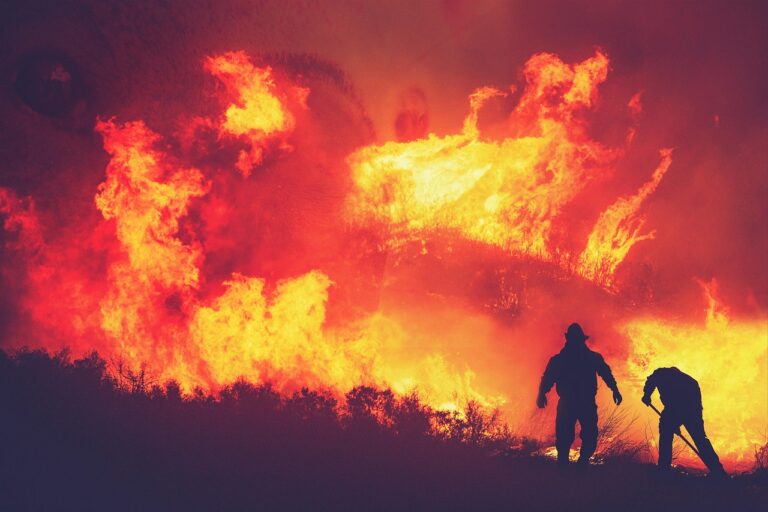
Scientists are sounding the alarm: wildfire smoke, fueled by climate change, could soon become the most devastating climate-related health hazard in the United States. A new study projects that by 2050, smoke exposure could cause more than 70,000 excess deaths each year and cost the U.S. economy over $600 billion annually.
This research underscores a growing reality — smoke is not just a temporary nuisance during wildfire season. It is an escalating public health crisis with long-term economic consequences.
The Growing Toll of Wildfire Smoke
Wildfires have always been part of the natural landscape in the American West, but warming temperatures and drier conditions are making them more frequent, more intense, and longer-lasting. Alongside the flames comes a secondary but far-reaching danger: smoke.
Unlike fire, which destroys locally, wildfire smoke travels hundreds — even thousands — of miles. Tiny particles in smoke, known as fine particulate matter (PM2.5), penetrate deep into the lungs and bloodstream. This exposure increases the risk of heart disease, stroke, lung cancer, asthma attacks, and premature death.
According to the study, around 41,000 Americans already die prematurely each year due to wildfire smoke exposure. That number could rise dramatically in the coming decades.
What the Numbers Say
- Current impact: About 41,000 annual premature deaths linked to smoke.
- Future projection: Up to 70,000 excess deaths each year by 2050.
- Economic burden: Estimated at $608 billion annually by midcentury.
In states like Oregon, researchers predict as many as 831 excess deaths per year from smoke exposure alone. Other wildfire-prone states, including California, Washington, and Colorado, face similar risks.
Why Smoke Is Such a Serious Threat
Unlike flooding or extreme heat, which affect specific regions or populations, wildfire smoke spreads widely. It drifts across state lines and lingers indoors, making it nearly impossible to avoid. Even communities far from fire zones are exposed.
The health impacts also disproportionately affect vulnerable groups — children, older adults, and people with preexisting conditions. For these populations, prolonged smoke exposure can be life-threatening.
What Can Be Done?
Experts emphasize that solutions require both prevention and protection:
- Reducing greenhouse gas emissions to limit climate change and wildfire risk.
- Improving land and forest management to reduce the fuel that drives massive wildfires.
- Expanding public health preparedness with stronger air quality monitoring, better filtration in schools and homes, and public education campaigns.
- Investing in research and community resilience, particularly in vulnerable regions.
While individuals can take steps — like using high-quality air filters and wearing protective masks during smoke events — large-scale action is needed to reduce the root causes and protect public health.
A Warning and a Call to Action
The study’s authors warn that wildfire smoke is on track to become the single most expensive health threat tied to climate change in the U.S. If projections hold true, the human and financial toll will surpass the burden from heat waves, flooding, and other climate-related dangers.
For policymakers, health officials, and communities, the message is clear: addressing wildfire smoke must be a top priority in the fight against climate change.