
Skin conditions can be confusing, especially when two of the most common—psoriasis and eczema—look similar. Both can cause red, itchy patches that are uncomfortable and sometimes persistent. If you’ve ever wondered how to tell the difference, you are not alone. Understanding psoriasis vs eczema can help you identify symptoms, prevent flare-ups, and seek the right care.
What is Psoriasis?
Psoriasis is an autoimmune condition, which means the body’s immune system mistakenly triggers inflammation in the skin. This causes skin cells to grow much faster than normal. Whereas typical skin cells take about a month to renew, in psoriasis, the cycle can take just a few days. The result is thick, raised patches covered with silvery-white scales.
Common areas affected include the elbows, knees, scalp, and lower back. Some people may develop psoriatic arthritis, a type of joint inflammation linked to psoriasis. Psoriasis is chronic, with periods of flare-ups and remission. While not contagious, it can impact daily life and confidence, especially during severe flare-ups.
There are several types of psoriasis. Plaque psoriasis is the most common, presenting as raised, scaly patches. Guttate psoriasis appears as small, drop-shaped spots often triggered by infections. Pustular psoriasis is characterized by pus-filled bumps, while inverse psoriasis occurs in skin folds and appears red and shiny rather than scaly.
What is Eczema?
Eczema, also called atopic dermatitis, affects the skin’s barrier function. People with eczema have more sensitive skin that reacts to irritants, allergens, and environmental factors. This leads to red, inflamed, itchy patches that can ooze or crust if scratched. Eczema often appears in skin folds, such as behind the knees, inside the elbows, or around the wrists and neck.
Unlike psoriasis, eczema is not autoimmune-driven. It is influenced by genetics, environmental triggers, and immune system sensitivity. Common triggers include stress, harsh soaps, allergens, dry skin, and temperature changes. Eczema is particularly common in children but can persist into adulthood.
Comparing Psoriasis vs Eczema
While both conditions share similar symptoms, there are key differences:
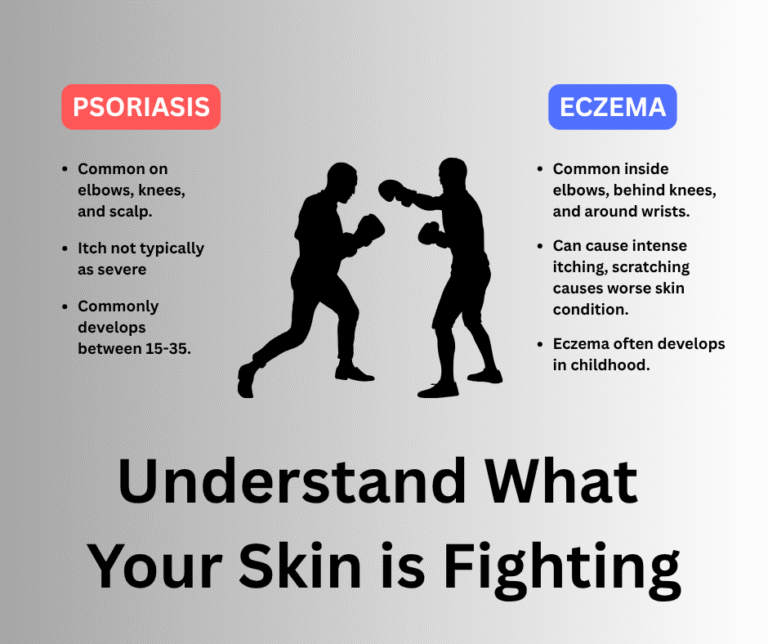
- Appearance: Psoriasis patches are thick, raised, and covered in silvery scales. Eczema is red, inflamed, and irregular, sometimes oozing or crusting.
- Itchiness: Eczema usually causes more intense itching, which can worsen the skin condition if scratched excessively. Psoriasis can itch but is often less severe.
- Location: Psoriasis favors extensor areas like elbows, knees, and scalp. Eczema is more common in flexor areas, such as inside elbows, behind knees, and around the wrists.
- Triggers: Psoriasis flare-ups can be triggered by stress, infections, or medications. Eczema flare-ups are commonly caused by irritants, allergens, dry skin, or temperature changes.
- Onset: Psoriasis can develop at any age but is most common between 15 and 35. Eczema often begins in childhood, sometimes appearing as red patches on the cheeks or scalp.
Why Accurate Diagnosis Matters
Correctly distinguishing psoriasis vs eczema is essential because treatments differ. Psoriasis treatment often involves controlling immune system activity with topical corticosteroids, vitamin D analogs, phototherapy, or systemic medications. Eczema treatment focuses on repairing the skin barrier, using moisturizers, topical steroids, and avoiding triggers.
Regular skin care is vital for both conditions. Moisturizing daily, using gentle products, avoiding hot water and harsh soaps, and keeping track of triggers can help prevent flare-ups.
Emotional and Lifestyle Considerations
Both psoriasis and eczema can affect mental health. Visible skin conditions may lead to anxiety, embarrassment, or social withdrawal. Eczema’s intense itchiness can disrupt sleep, reducing overall quality of life. Support from healthcare providers, family, and patient communities is important for managing these conditions.
When to See a Dermatologist
Persistent red, itchy patches that do not respond to over-the-counter treatments should be evaluated by a dermatologist. Professional assessment ensures proper diagnosis and a personalized treatment plan, which can prevent complications, reduce flare-ups, and improve comfort and confidence.
Final Thoughts
Understanding psoriasis vs eczema empowers you to take control of your skin health. While both share similarities, each condition has unique causes, symptoms, and treatment strategies. Early recognition and proper care allow for effective management, helping you feel confident in your skin.
Living with a chronic skin condition can be challenging, but you are not alone. With the right care, support, and education, both psoriasis and eczema can be managed successfully, allowing you to enjoy healthier skin and a better quality of life.