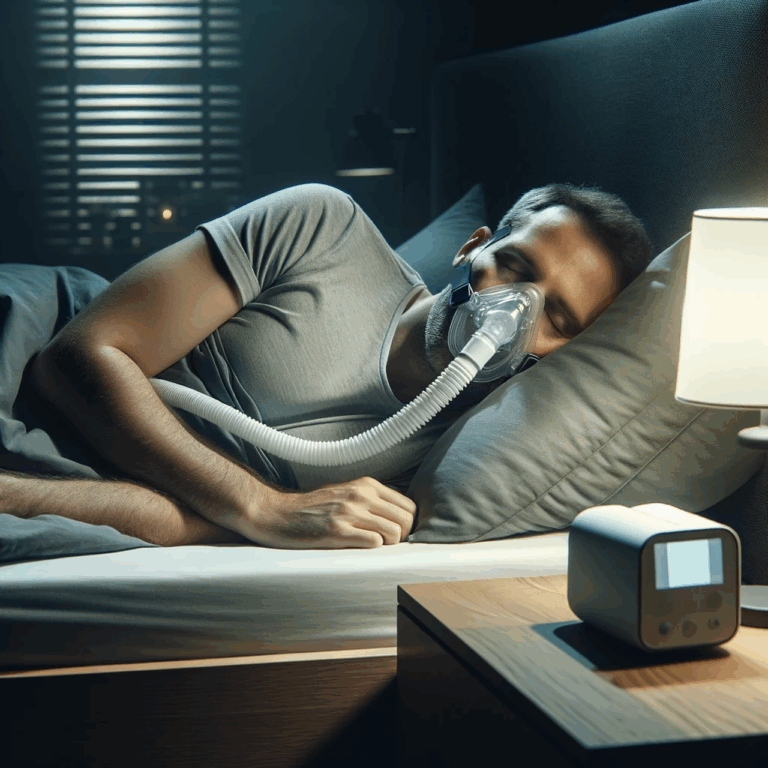
Most people understand sleep apnea as a breathing problem.
But what many people do not realize is that the condition can trigger a chain reaction throughout the entire body night after night.
During sleep apnea, breathing repeatedly slows, becomes restricted, or temporarily stops altogether during sleep. In some people, this may happen dozens of times per hour — often without them fully realizing it.
And every time breathing becomes disrupted, the body responds.
That response affects:
- oxygen levels
- heart rate
- stress hormones
- sleep quality
- brain activity
- metabolism
- recovery systems
Over time, the cumulative impact of those disruptions may extend far beyond simple tiredness.
Understanding the broader sleep apnea effects on the body helps explain why the condition is associated with fatigue, brain fog, cardiovascular strain, metabolic issues, and emotional exhaustion.
The Body Treats Interrupted Breathing Like an Emergency
During a sleep apnea event, airflow becomes partially or completely blocked.
As oxygen levels begin to fall, the brain detects the change quickly.
Even if the person does not fully wake up consciously, the body activates a stress response designed to restore breathing.
That response may include:
- increased heart rate
- release of adrenaline and cortisol
- sudden muscle activation
- brief awakenings or “micro-arousals”
- shifts out of deeper sleep stages
From the body’s perspective, something is wrong.
The nervous system responds accordingly.
This process may repeat again and again throughout the night.
For some individuals with severe sleep apnea, it can happen hundreds of times before morning.
Oxygen Levels Can Drop Repeatedly Overnight
One of the most important sleep apnea effects involves oxygen.
Healthy sleep depends on stable oxygen delivery throughout the night. But during sleep apnea episodes, oxygen levels may repeatedly decrease before normal breathing resumes.
These repeated oxygen fluctuations place stress on multiple systems in the body.
Researchers believe this may contribute to:
- cardiovascular strain
- inflammation
- blood vessel stress
- increased blood pressure
- metabolic dysfunction
The body is essentially cycling through repeated stress-and-recovery patterns while the person is supposed to be resting.
That helps explain why sleep apnea can feel so physically draining over time.
The Brain Never Fully Settles Into Restorative Sleep
Sleep is not simply “on” or “off.”
Healthy sleep moves through structured stages, including:
- light sleep
- deep sleep
- REM sleep
Each stage supports different recovery functions for the brain and body.
But repeated breathing interruptions can prevent the brain from staying in these restorative stages long enough to complete critical recovery processes.
Instead, the brain remains partially alert throughout the night.
Many people never consciously remember waking up.
But the brain still experiences repeated interruptions.
This fragmented sleep pattern is one reason sleep apnea effects often include:
- brain fog
- memory problems
- poor concentration
- irritability
- daytime exhaustion
The body may spend hours asleep without ever achieving fully restorative rest.
Stress Hormones Remain Elevated
Another major sleep apnea effect involves the body’s stress systems.
Every breathing interruption can activate the sympathetic nervous system — often called the “fight or flight” response.
Stress hormones like cortisol and adrenaline may repeatedly surge overnight as the body works to restart breathing and stabilize oxygen levels.
Over time, chronic activation of these stress pathways may affect:
- blood pressure
- blood sugar regulation
- inflammation
- mood
- energy levels
- cardiovascular health
This is one reason many people with sleep apnea wake feeling tense, anxious, or physically “wired” despite being exhausted.
The body may spend the entire night in a low-grade state of physiological stress.
Sleep Apnea Can Affect the Heart and Blood Vessels
Doctors increasingly recognize the connection between sleep apnea effects and cardiovascular health.
Repeated oxygen drops and stress hormone surges may place ongoing strain on the heart and circulatory system.
Untreated sleep apnea has been associated with:
- high blood pressure
- irregular heart rhythms
- increased cardiovascular risk
- stroke risk
- heart strain over time
Researchers continue studying exactly how strong these relationships are, but it is clear that sleep apnea affects much more than sleep quality alone.
The condition can influence how hard the cardiovascular system must work during the night.
Metabolism and Blood Sugar May Be Affected Too
Sleep quality plays an important role in metabolic regulation.
Poor or fragmented sleep may influence:
- insulin sensitivity
- appetite hormones
- hunger cues
- glucose regulation
- energy balance
This is one reason sleep apnea is frequently discussed alongside obesity, metabolic syndrome, and Type 2 diabetes.
Researchers believe disrupted sleep and chronic stress activation may contribute to broader metabolic dysfunction over time.
The body’s recovery systems simply do not operate normally when sleep becomes chronically fragmented.
Why People Often Feel So Mentally Drained
Many people think sleep apnea fatigue only means physical tiredness.
But mental exhaustion is often just as significant.
Poor restorative sleep can affect:
- focus
- attention span
- emotional regulation
- patience
- memory
- decision-making
Some people describe feeling emotionally flat or mentally disconnected during the day.
Others feel unusually irritable, anxious, or overwhelmed by normal daily stress.
Sleep affects nearly every part of brain function.
When the brain repeatedly loses restorative sleep, those effects can become surprisingly noticeable.
Why Sleep Apnea Often Goes Underrated
One reason sleep apnea is often underestimated is because the damage happens quietly.
There is no dramatic injury.
No obvious external symptom during the day.
Instead, the condition slowly chips away at recovery night after night.
People may normalize:
- fatigue
- poor focus
- headaches
- irritability
- low motivation
- daytime sleepiness
They assume:
“I’m just stressed.”
“I’m getting older.”
“I’m always tired lately.”
But the body may be struggling through interrupted sleep and repeated oxygen stress every single night.
Sleep Is One of the Body’s Most Important Recovery Systems
Modern sleep science increasingly recognizes sleep as an active biological process — not passive downtime.
During healthy sleep, the body works to:
- repair tissues
- regulate hormones
- consolidate memory
- reset stress systems
- support immune function
- restore energy balance
Sleep apnea interferes with many of those processes simultaneously.
That is why sleep apnea effects often feel broad, systemic, and difficult to explain.
The condition disrupts recovery itself.
Final Thought
Sleep apnea is far more than loud snoring or occasional tiredness.
It is a condition that can repeatedly interrupt oxygen flow, activate stress responses, fragment restorative sleep, and place strain on multiple systems throughout the body night after night.
Understanding what actually happens during sleep apnea helps explain why the condition can affect energy, focus, mood, metabolism, and overall health in such wide-ranging ways.
And perhaps most importantly, it helps people recognize that poor sleep is not a minor inconvenience.
It is one of the body’s most important recovery systems — and when that system becomes disrupted, the effects can reach nearly everywhere.